
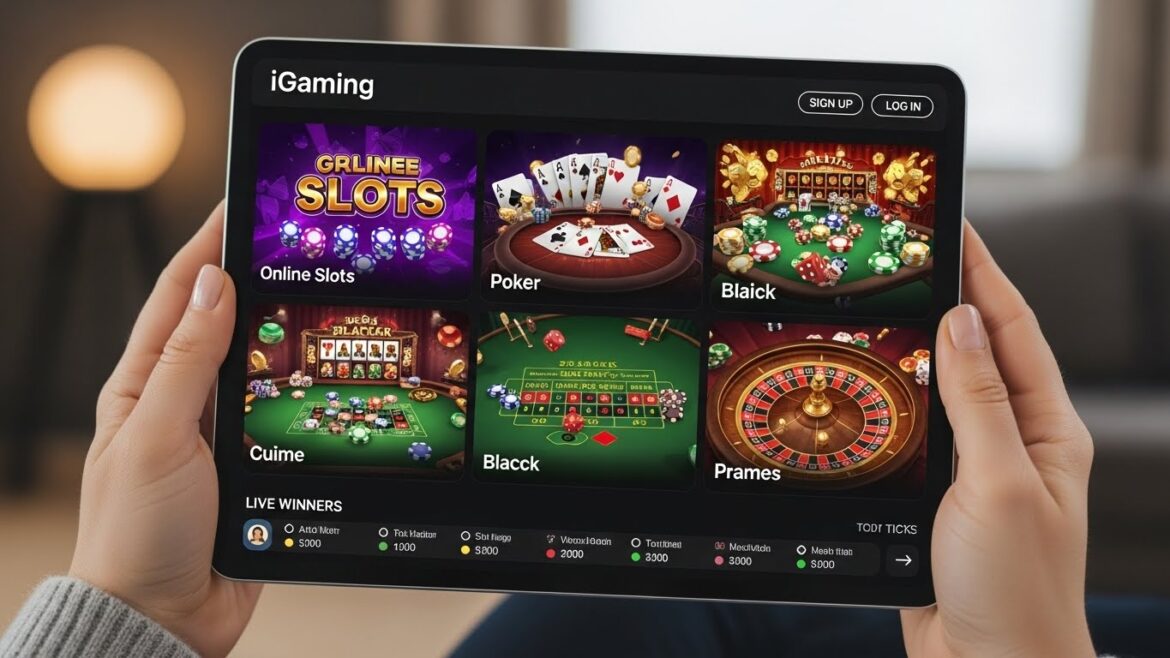
In recent years, the iGaming industry has experienced exponential growth, transforming the way people engage with gambling. What was once limited to traditional brick-and-mortar casinos has now evolved into a global online phenomenon, offering players everything from poker and blackjack to sports betting and slot games—all accessible from the comfort of their homes. The rise of iGaming represents not just a technological advancement, but also a shift in societal attitudes towards gambling. This blog post will explore the explosive growth of iGaming, the technologies driving this shift, and what the future holds for online gambling.
The Emergence of iGaming: A New Digital Frontier
The concept of iGaming, or internet gaming, began to take shape in the late 1990s with the advent of online casinos. The first online casinos were rudimentary compared to today’s standards, with limited game offerings and basic graphics. However, they were revolutionary in that they allowed players to experience the thrill of gambling without having to visit a physical casino. The early years of iGaming were marked by skepticism, as many doubted whether online gambling could replicate the excitement and authenticity of traditional casinos.
Despite these challenges, iGaming began to gain traction as internet speeds improved, graphics evolved, and more secure payment methods were developed. In 1994, Antigua and Barbuda passed the Free Trade & Processing Act, which provided the legal foundation for online gambling. This marked the beginning of a new era for the industry, which was soon to become one of the most lucrative sectors in the global entertainment market.
By the early 2000s, numerous online casinos and poker rooms had emerged, offering a wide variety of gambling experiences to players worldwide. The industry continued to evolve, fueled by the rise of broadband internet, better encryption technology, and more sophisticated software. This set the stage for a boom in the 2010s, where mobile gaming, live dealer games, and sports betting came to dominate the iGaming landscape.
The Digital Revolution: The Role of Technology in iGaming’s Growth
One of the most significant factors driving the growth of iGaming is technology. The evolution of the internet, along with innovations in software, has made it easier than ever for players to engage with online gambling platforms. Let’s explore some of the key technological developments that have shaped the iGaming industry.
Mobile Gaming: Gambling Anytime, Anywhere
The advent of smartphones and tablets has revolutionized the iGaming industry. Mobile gaming allows players to access their favorite games on the go, whether they’re commuting, relaxing at home, or even on vacation. This shift towards mobile-first gaming has significantly increased the number of iGamers, with millions of players now gambling on their phones instead of on traditional desktop computers.
Mobile iGaming platforms are highly optimized for smaller screens and offer intuitive interfaces that make it easy for users to navigate the games. Many operators have developed dedicated apps for their casinos or sports betting platforms, offering seamless experiences for players. This mobile revolution has also driven the development of mobile-specific features, such as touch-based controls, in-app purchases, and location-based services for geo-targeted promotions.
Live Dealer Games: A New Level of Interaction
Another groundbreaking development in iGaming technology is the introduction of live dealer games. These games allow players to engage with real dealers in real-time through live video streaming, replicating the atmosphere of a physical casino. Players can interact with the dealer and other participants, chat in real-time, and place their bets just as they would in a traditional casino setting.
Live dealer games have become incredibly popular, particularly for table games such as blackjack, baccarat, and roulette. They provide a level of authenticity and interaction that online slots or other virtual games cannot match. The technology behind live dealer games, including high-definition video streaming and advanced camera setups, has created an immersive and interactive gambling experience that feels remarkably real.
Artificial Intelligence and Personalization
Artificial intelligence (AI) is another driving force in the world of iGaming. AI allows platforms to personalize the player experience by tailoring game recommendations based on user behavior. By analyzing data such as the games players enjoy, the stakes they prefer, and their playing habits, iGaming platforms can offer personalized promotions, bonuses, and content.
AI is also being used to enhance customer support through chatbots and automated systems, offering instant assistance to players with questions or issues. Additionally, AI is helping to improve game security by detecting fraudulent activity, monitoring player behavior, and ensuring fair play.
Virtual Reality (VR) and Augmented Reality (AR)
The integration of virtual reality (VR) and augmented reality (AR) in iGaming is an exciting frontier. Although still in the early stages, VR casinos offer players the opportunity to immerse themselves in a fully interactive 3D environment, where they can walk around virtual casino floors, interact with dealers, and play games like poker or roulette. VR gambling aims to take the online gaming experience to the next level by offering a truly immersive environment that mimics the experience of being in a land-based casino.
Similarly, AR is being explored for creating interactive gambling experiences in real-world environments. For example, AR could be used to overlay digital slot machines on physical casino floors, offering players additional ways to interact with the games.
The Expansion of Online Sports Betting
Online sports betting is another major pillar of the iGaming industry. Sports betting has been around for centuries, but the internet has taken it to new heights, allowing players to bet on sports from all over the world in real-time. The development of secure online payment systems and live betting technology has made it easier for players to place bets on a wide range of events, from football and basketball to esports and even reality TV shows.
The legalization of sports betting in the United States in recent years has further accelerated the growth of iGaming. Since the repeal of the Professional and Amateur Sports Protection Act (PASPA) in 2018, several states have legalized sports betting, opening the doors for online platforms to operate legally in a rapidly growing market.
Online sports betting platforms now offer a wide variety of betting options, including traditional wagers on game outcomes, in-play betting, fantasy sports, and even prop bets on specific events within games. The rise of mobile sports betting has made it even easier for players to place bets while watching games, increasing the appeal of the activity.
Legal and Regulatory Challenges
While the iGaming industry has flourished, it has also faced a complex web of legal and regulatory challenges. The legality of online gambling varies widely from country to country, and in some regions, it is entirely prohibited. In jurisdictions where iGaming is legal, operators must comply with strict regulations to ensure fair play, protect players, and prevent problem gambling.
The need for regulation has become even more urgent as the industry continues to expand. Many jurisdictions have introduced licensing systems that require online gambling operators to meet specific standards regarding transparency, security, and responsible gambling. Some regions have even gone a step further by implementing self-exclusion programs and setting limits on the amount of money players can deposit or wager.
The evolution of regulations has created a complex landscape for iGaming operators to navigate, as they must remain compliant with both local laws and international standards. As the industry grows, it is likely that more countries will look to regulate online gambling, and operators will need to adapt to a wide range of legal environments.
The Future of iGaming: What’s Next?
The iGaming industry is poised for even greater innovation and expansion in the coming years. As technology continues to evolve, we can expect to see further advancements in VR, AR, and AI that will transform how players engage with online casinos, sportsbooks, and other gambling platforms. The rise of cryptocurrency, particularly Bitcoin, is also likely to play a major role in shaping the future of iGaming, with players increasingly using digital currencies for transactions due to their speed, anonymity, and security.
In addition to technological advancements, the iGaming industry is likely to see a greater focus on responsible gaming practices. As more people engage with online gambling, it will become increasingly important for platforms to offer tools and support for players to gamble responsibly. This could include the integration of AI-driven systems to detect problem gambling behavior, as well as greater emphasis on self-regulation and player protection.
Finally, as global markets open up to online gambling, we can expect iGaming to become a truly global industry, with players from all corners of the world engaging with platforms in new and innovative ways. The potential for cross-border partnerships, new types of games, and unique regional offerings will continue to drive the growth of this vibrant sector.
Conclusion
iGaming has come a long way since its early days, with advancements in technology and regulatory frameworks driving its growth into a multi-billion-dollar industry. As mobile gaming, live dealer experiences, AI, and other innovations continue to reshape the landscape, the future of iGaming looks incredibly promising. While challenges remain, including legal complexities and the need for responsible gaming, the industry’s resilience and adaptability suggest that it will continue to thrive and evolve. Whether you’re an experienced gambler or a newcomer to the world of online gaming, the digital revolution in gambling is just getting started—and it promises to deliver even more exciting developments in the years to come.