Introduction
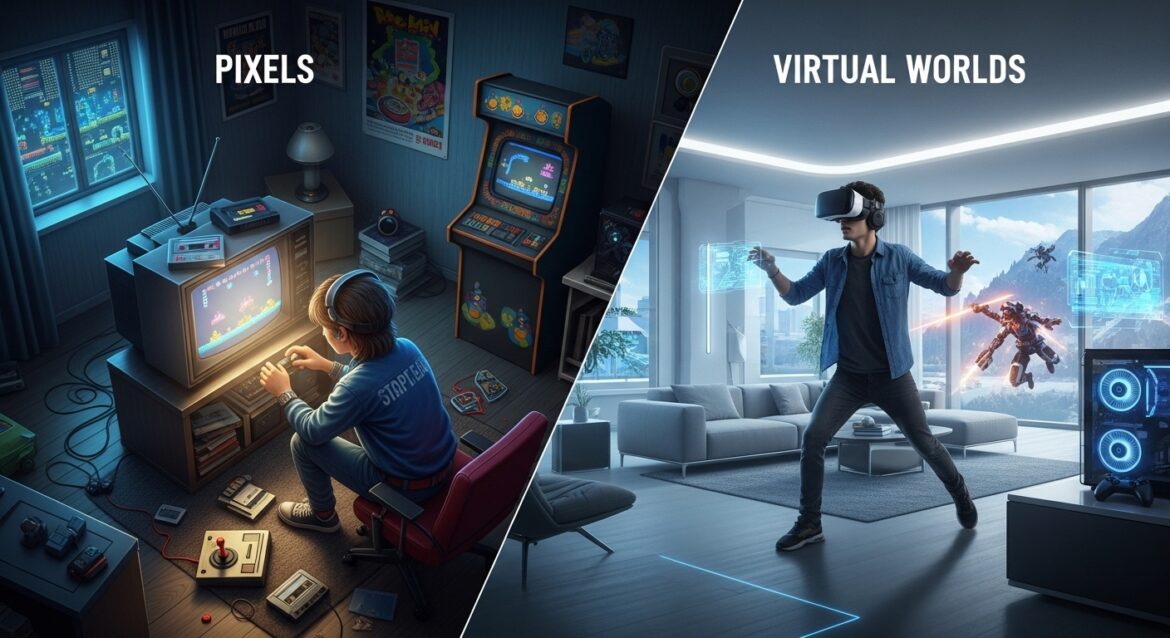
Gaming is more than a pastime. It is a universe of creativity, skill, storytelling, and technology that has shaped generations and continues to evolve faster than almost any other form of entertainment. What began as a few flickering pixels on black screens has become a global phenomenon, connecting millions across platforms, genres, and cultures. Today, gaming is not only an art form but also an industry rivaling film, television, and music combined. In this blog, we will explore the journey of gaming from its humble beginnings to the high-definition, immersive experiences of today, its influence on society, the rise of esports, and the incredible innovations shaping its future.
The Origins of Gaming
The origins of gaming can be traced back to the mid-20th century. Early computer scientists and engineers experimented with programming simple games as a way to test machines. The first widely recognized video game, “Tennis for Two,” was created in 1958 by physicist William Higinbotham, followed by “Spacewar!” in 1962. These early creations laid the groundwork for what would later explode into an industry worth hundreds of billions of dollars. The 1970s saw the arrival of arcade machines, bringing gaming into public spaces. The release of “Pong” by Atari in 1972 became a commercial success and introduced video games to mainstream audiences. Soon, arcades filled with titles like “Space Invaders” and “Pac-Man” became cultural icons, influencing fashion, music, and even language.
The Rise of Home Consoles
As technology advanced, gaming moved from public arcades to private living rooms. The late 1970s and early 1980s saw the birth of home consoles like the Atari 2600, which brought the magic of gaming into millions of households. It was an era of cartridges, joysticks, and simple yet addictive gameplay. Games like “Asteroids,” “Centipede,” and “Adventure” became family favorites. However, the early 1980s also saw a major crash in the video game industry, largely due to market oversaturation and low-quality titles. It was Nintendo that revived gaming in 1985 with the launch of the Nintendo Entertainment System (NES). With iconic franchises like “Super Mario Bros.” and “The Legend of Zelda,” Nintendo redefined what games could be. These titles offered engaging stories, memorable characters, and challenges that appealed to both children and adults.
The 1990s: The Era of Innovation
The 1990s were a golden age of innovation for gaming. It was a decade that saw the leap from 2D to 3D, the birth of legendary franchises, and the rise of competition among console makers. Sega and Nintendo engaged in a fierce rivalry, producing classics like “Sonic the Hedgehog” and “Super Mario World.” Sony entered the market with the PlayStation in 1994, bringing cinematic storytelling and deeper gameplay experiences. At the same time, PC gaming began to thrive. Titles like “Doom,” “Warcraft,” and “SimCity” showed the potential of personal computers as gaming platforms. Multiplayer gaming also began to emerge, with local network setups allowing friends to compete or cooperate in the same room. The late 90s also saw the release of groundbreaking games such as “Final Fantasy VII,” “Metal Gear Solid,” and “The Legend of Zelda: Ocarina of Time,” which pushed the boundaries of storytelling and world-building.
The 2000s: Online Gaming and Global Communities
As the new millennium began, the internet revolutionized gaming forever. The rise of broadband connections allowed players to compete with others across the world. Online multiplayer titles like “Counter-Strike,” “World of Warcraft,” and “Halo 2” became cultural landmarks, giving rise to online communities that extended beyond the games themselves. Consoles like the PlayStation 2, Xbox, and GameCube dominated living rooms, offering a new level of graphics and immersive gameplay. The concept of downloadable content (DLC) began to emerge, allowing developers to expand their games beyond initial releases. Meanwhile, handheld consoles such as the Game Boy Advance and PlayStation Portable allowed gamers to play anywhere. The 2000s also marked the rise of new genres. Open-world games like “Grand Theft Auto III” introduced vast, interactive environments, while rhythm games like “Guitar Hero” brought music into the mix. Online platforms like Steam transformed how games were bought and distributed, setting the stage for the digital gaming era we know today.
The Evolution of Graphics and Immersion
The evolution of graphics has been one of the most noticeable transformations in gaming history. From simple sprites and polygons, we now have hyper-realistic visuals that rival real life. Advances in GPU technology, motion capture, and physics engines have allowed developers to create worlds that feel alive. Modern games feature dynamic weather systems, realistic facial animations, and detailed environments that immerse players like never before. Virtual reality (VR) and augmented reality (AR) have taken this immersion to another level. VR headsets like the Oculus Quest and PlayStation VR place players directly inside the game world, while AR titles like “Pokémon GO” blend gaming with the real world. These innovations have redefined what it means to play, transforming gaming from a flat-screen experience into a fully interactive adventure.
The Rise of Mobile Gaming
One of the most significant shifts in gaming came with the rise of smartphones. Mobile gaming turned millions of casual users into gamers overnight. Titles like “Angry Birds,” “Candy Crush Saga,” and “Clash of Clans” became global sensations, proving that games didn’t need consoles or high-end PCs to be successful. The accessibility of mobile gaming allowed anyone with a phone to play, breaking down barriers of age, location, and income. Today, mobile gaming generates more revenue than both PC and console gaming combined. It has also introduced new business models such as free-to-play and microtransactions, which have become dominant in the industry. Despite criticism, these models have allowed developers to sustain games for years and continually deliver new content.
Gaming as an Art Form
For years, people debated whether video games could be considered art. Today, that question has been answered. Games combine visual design, music, storytelling, and interactivity to create experiences that evoke emotion and thought, much like films or literature. Titles like “Journey,” “The Last of Us,” and “Shadow of the Colossus” have demonstrated that games can tell stories that move players deeply. Indie developers have also contributed significantly to gaming as an art form. Independent titles like “Undertale,” “Celeste,” and “Hollow Knight” showcase creativity, unique mechanics, and personal expression that often rival large studio productions. Artistic direction, narrative design, and player choice have turned gaming into one of the most dynamic forms of modern art.
The Social Impact of Gaming
Gaming has a profound social impact. It brings people together across distances, cultures, and languages. Online games allow players to cooperate and compete, forming friendships and communities that often extend beyond the screen. Multiplayer platforms, voice chat, and social media integration have turned gaming into a social activity rather than a solitary one. Moreover, gaming can promote learning, problem-solving, and creativity. Educational games teach everything from math to history, while sandbox games like “Minecraft” encourage imagination and design skills. However, gaming has also faced criticism over issues such as addiction, violence, and toxicity in online communities. As the medium matures, both developers and players have become more aware of these challenges, working toward more inclusive and responsible gaming environments.
The Rise of Esports
One of the most fascinating developments in gaming has been the rise of esports. Competitive gaming has evolved from small local tournaments into massive global events watched by millions. Games like “League of Legends,” “Dota 2,” “Counter-Strike: Global Offensive,” and “Fortnite” have become professional sports in their own right, with prize pools worth millions of dollars. Esports athletes train, strategize, and compete at levels comparable to traditional athletes. Entire stadiums are filled with cheering fans, and professional organizations manage teams, sponsorships, and broadcasting rights. Esports has not only legitimized gaming as a competitive pursuit but has also provided career opportunities in commentary, management, and production.
Streaming and the Creator Revolution
With platforms like Twitch and YouTube Gaming, streaming has changed the way people engage with games. Players are no longer just consumers; they are creators, entertainers, and influencers. Streamers and content creators play games live, sharing their reactions, humor, and skills with audiences around the world. This has democratized gaming culture, giving rise to new forms of entertainment and celebrity. Some streamers have millions of followers and shape gaming trends through their content. Streaming has also fostered interactive engagement, where audiences participate through chat, donations, and votes that influence gameplay. It represents a new era where gaming and entertainment merge seamlessly.
The Power of Storytelling in Games
Modern games are as much about narrative as they are about gameplay. Developers now craft deep, emotional stories that rival movies and novels. Story-driven games like “Red Dead Redemption 2,” “God of War,” and “Mass Effect” showcase complex characters, moral choices, and cinematic experiences that resonate with players on a personal level. Interactive storytelling allows players to shape the narrative, making each playthrough unique. This interactivity transforms players from passive viewers into active participants in the story. The emotional weight of player choice creates powerful connections that traditional media cannot replicate.
Representation and Diversity in Gaming
In recent years, the gaming industry has made significant strides toward inclusion and diversity. Developers have begun creating more varied characters and stories that reflect real-world experiences and identities. Games now feature protagonists of different genders, ethnicities, and backgrounds, allowing more players to see themselves represented. This shift has also led to a broader range of themes, addressing topics like mental health, discrimination, and resilience. Independent studios have been particularly instrumental in pushing this movement forward, using games as platforms for empathy and social commentary.
The Business of Gaming
Behind the art and excitement lies a massive global business. The gaming industry generates hundreds of billions of dollars annually, surpassing movies and music combined. It encompasses console sales, PC hardware, mobile applications, merchandising, and esports. Major publishers like Nintendo, Sony, Microsoft, and Tencent dominate the market, but independent developers also find success through digital distribution. Monetization strategies have evolved over time, from simple one-time purchases to complex models involving in-game economies, subscriptions, and seasonal content. The business side of gaming has fueled innovation but also sparked debates about ethics, particularly around microtransactions and loot boxes.
The Role of Technology and AI in Modern Gaming
Artificial intelligence has become an integral part of game development and design. AI enhances enemy behavior, creates dynamic worlds, and personalizes player experiences. Procedural generation, for instance, allows developers to create vast worlds with endless possibilities, as seen in games like “No Man’s Sky.” Machine learning helps studios understand player behavior, improving game balance and engagement. In the future, AI could enable games that adapt to each player’s style, offering truly personalized adventures. Combined with cloud computing and real-time rendering, the boundaries between virtual and real are becoming increasingly blurred.
The Future of Gaming
The future of gaming looks limitless. With the rise of cloud gaming services, players no longer need expensive hardware to enjoy top-tier games. Streaming technology allows complex titles to run on almost any device, from phones to smart TVs. Virtual and augmented reality will continue to grow, making experiences more immersive and interactive. The integration of blockchain and digital ownership may redefine how players trade and value in-game assets. Moreover, as artificial intelligence and storytelling evolve, we may soon see games that can emotionally respond to the player’s decisions in real time. The boundary between player and creator will continue to fade, making gaming more participatory and imaginative than ever before.
Conclusion
From the blinking pixels of the 1970s to the photorealistic worlds of today, gaming has undergone a remarkable transformation. It has evolved from a niche hobby into a global cultural force that influences technology, art, and human connection. Whether it’s the thrill of competition, the depth of storytelling, or the simple joy of discovery, gaming offers something for everyone. It challenges our minds, brings us together, and continues to push the boundaries of what is possible. The story of gaming is one of innovation, creativity, and community — and it is far from over. As technology advances and imagination grows, the next chapter promises to be even more exciting.