Introduction
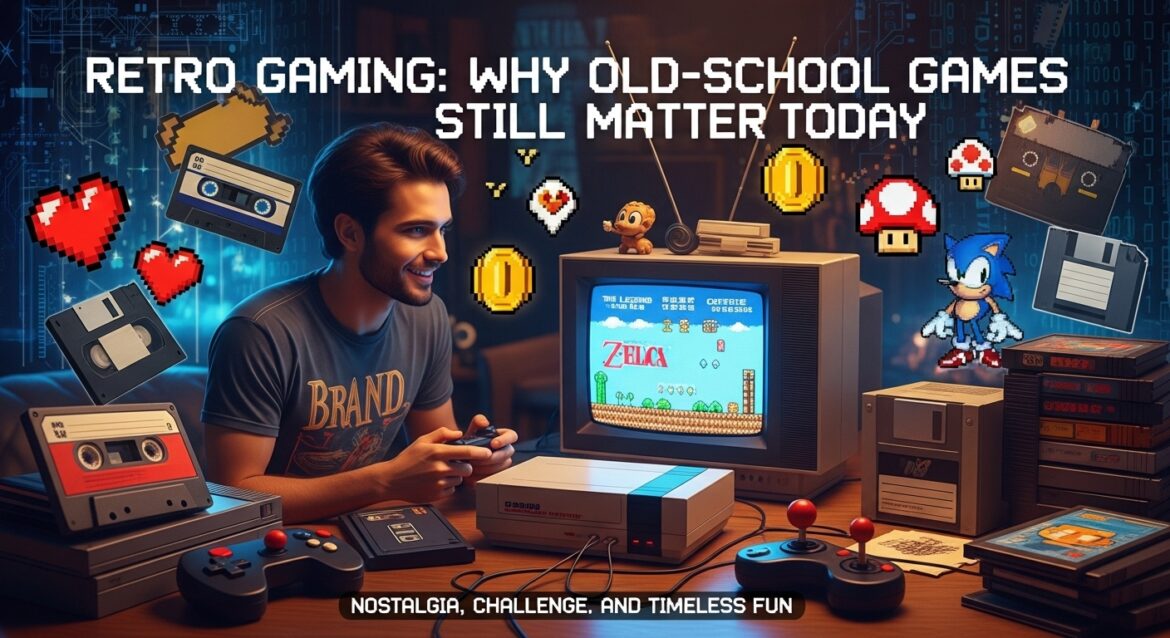
While modern games feature stunning graphics and massive open worlds, retro gaming—the love for old-school titles like Pac-Man, Super Mario Bros., and Sonic—remains strong. Retro games are more than nostalgia; they represent the foundation of today’s gaming culture.
In this blog, we’ll explore why retro gaming is still relevant, the cultural impact of classics, and how old-school games inspire modern design.
The Golden Age of Retro Games
8-Bit and 16-Bit Eras
Games like Super Mario Bros., The Legend of Zelda, and Mega Man defined the 1980s and 1990s.
Arcade Culture
Arcades were social hubs where players gathered to compete, creating the first gaming communities.
Why Retro Games Still Matter
Simplicity and Fun
Retro games focus on core gameplay, not flashy graphics. Their simplicity makes them timeless.
Nostalgia
For many players, retro games are tied to childhood memories. Nostalgia fuels continued interest.
Influence on Modern Design
Indie developers draw inspiration from retro aesthetics and mechanics, as seen in Shovel Knight and Celeste.
Collecting Retro Games
Retro games are now collectibles. Consoles like the NES, Sega Genesis, and Game Boy fetch high prices among collectors.
Emulation and Remakes
- Emulators let modern players experience old games.
- Remakes like Resident Evil 2 and Final Fantasy VII bring classics to new audiences.
The Future of Retro Gaming
Retro gaming will continue to thrive through:
- Mini-consoles like NES Classic Edition.
- Digital re-releases on platforms like Nintendo Switch Online.
- Indie developers carrying forward retro-inspired designs.
Conclusion
Retro gaming is not just about the past—it’s about preserving history and appreciating the roots of modern gaming. Old-school games remain relevant because they remind us of where gaming began and why it continues to inspire new generations.