
Introduction
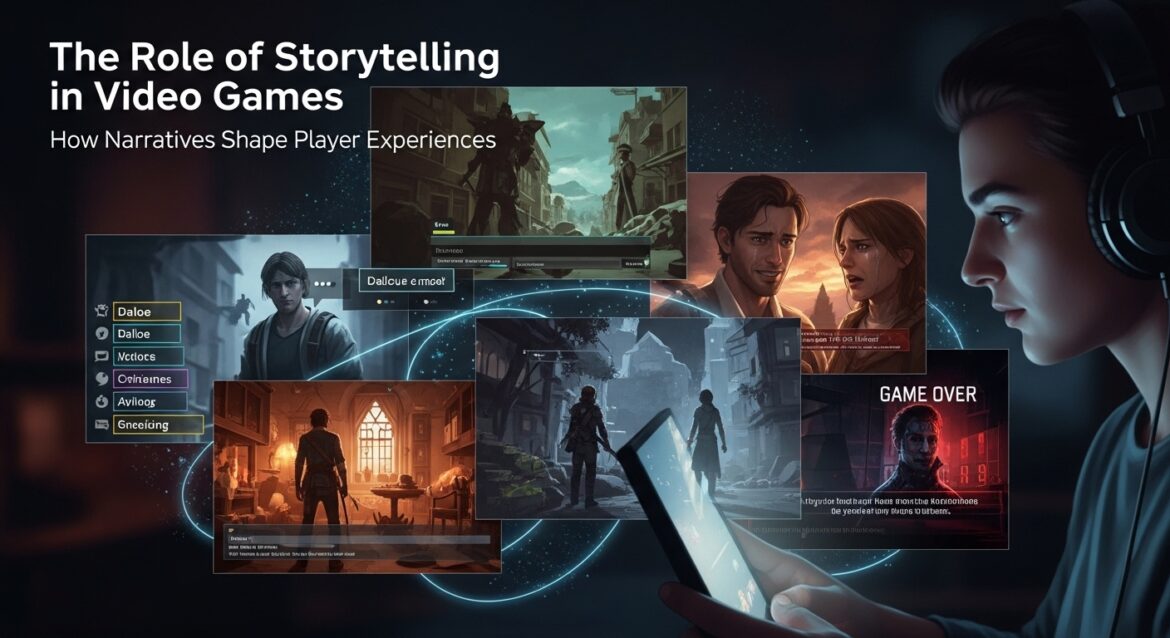
Storytelling has always been a part of human culture. From cave paintings to novels and movies, stories define how we understand the world. In gaming, storytelling has evolved into something unique: interactive narratives where players shape the story through choices and actions. Unlike books or films, games offer immersion and agency, making storytelling more personal and powerful.
In this blog, we’ll explore how storytelling has transformed gaming, highlight some of the most iconic story-driven games, and examine the future of interactive narratives.
The Early Stages of Storytelling in Games
Arcade Simplicity
Games like Pong and Space Invaders had little to no story. The focus was gameplay, not narrative.
The Rise of RPGs
In the 1980s and 1990s, role-playing games (RPGs) like Final Fantasy and The Legend of Zelda introduced epic quests and character-driven plots. Storytelling became central to gameplay.
How Games Tell Stories
Linear Narratives
Games like Uncharted and The Last of Us guide players through scripted, cinematic stories.
Branching Narratives
Titles like Mass Effect and Detroit: Become Human let players make choices that alter the story’s outcome.
Environmental Storytelling
Games like Dark Souls and Bioshock tell stories through the world itself—architecture, objects, and hidden lore.
Player-Created Stories
Sandbox games like Minecraft and Skyrim let players create their own narratives through freedom of play.
Iconic Story-Driven Games
- The Last of Us: Explored love, loss, and survival.
- Red Dead Redemption 2: A tragic Western tale with emotional depth.
- The Witcher 3: Rich storytelling through quests and character development.
- Undertale: Proved indie games could revolutionize narrative design.
Why Storytelling Matters in Games
- Emotional Connection: Stories make players care about characters and worlds.
- Immersion: Narrative draws players deeper into gameplay.
- Replay Value: Choices and multiple endings encourage replay.
The Future of Game Storytelling
- AI-driven narratives that adapt to player behavior.
- VR storytelling with immersive, first-person perspectives.
- Cross-media storytelling blending games, movies, and TV.
Conclusion
Storytelling elevates gaming from entertainment to art. By blending gameplay with narrative, games create experiences that resonate deeply with players. The future promises even more innovative ways to tell stories interactively.